Showing posts with label review. Show all posts

Friday, January 16, 2015

Review of a USB "Shortcut Hint" keyboard by Logickeyboard

For users who frequently jump back and forth between several complicated editing suite programs (audio, video, photo, etc.) it can be really hard to memorize all of the hundreds of short-cuts that can really speed up your workflow.  Logickeyboard makes "shortcut hint" keyboards that list all the shortcuts for a specific program right on your keyboard.


The type of keyboard that I got was a "Nero Slim Line" keyboard, US style, for Adobe Premiere Pro.  US style has the full-size shift key on the right.  European style only has a small shift key on the right.  Here's the video about this keyboard:


A couple of the key points that I love about this keyboard are:
- You can plug a USB light into it, to illuminate the keyboard.
- It has TWO each of the four main modifier keys:  Alt, Ctrl, Flying Windows, and full-size Shift.

One thing I didn't like about this keyboard was:
- The price.  This is designed and priced for professionals.  Mine was $135 base price, but with shipping and customs (from Britain) it cost me almost $200.  Too much.


Logickeyboard has keyboards for the following long list of programs in a variety of styles, for Mac and/or Windows depending on the program, various colours, various keyboard profiles, and so on:

Apple Final Cut
Adobe After Effects
Adobe Premiere Pro
Apple Color
Autodesk SMOKE
Avid Media Composer
Avid NewsCutter
DaVinci Resolve
Editshare Lightworks
Grass Valley Aurora
Grass Valley EDIUS
Pinnacle Liquid
Quantel
Sony Vegas Pro
Sony Sonaps XPRI NS
Ableton Live
Adobe Audition
Apple Logic Extended
Apple Logic Preset
Avid Pro Tools
Avid Sibelius
Cakewalk Sonar
MakeMusic Finale
MOTU Digital Performer
Steinberg Cubase & Nuendo
Adobe Illustrator
Adobe Lightroom
Adobe Photoshop
Apple Aperture
Maxon Cinema 4D Studio
Apple Boot Camp
Apple Parallels
and other specialty keyboards


I'm Jonathan Clark, known online as DJ Bolivia.  Do you want to learn more about DJ'ing and music production?  If so, visit:


If you happen to enjoy techno tracks, most of my tracks are available as free downloads from this link:


Thanks so much for visit, and for your support!  I really appreciate the fan base that I've been able to build up over the years.

Also, if you want to visit any of my other sites, here are a few links:
    YouTube:  youtube.com/djbolivia
    SoundCloud:  soundcloud.com/djbolivia
    Blogger:  djbolivia.blogspot.com
    Main Site:  www.djbolivia.ca

Monday, January 5, 2015

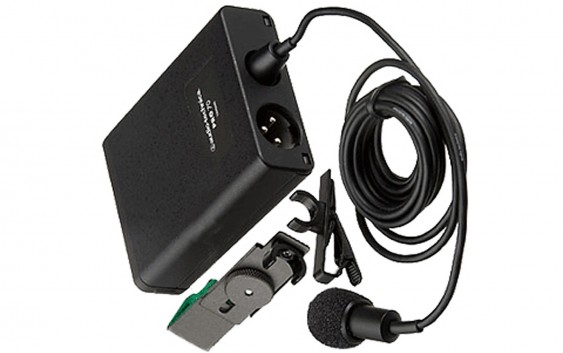
Review of the Pro 70 Lavalier Condenser Microphone from Audio Technica

My current preferred lav is the Pro 70 lavalier microphone from Audio Technica. It's a low to mid-budget microphone, not wireless, so you'll hopefully pay less than $150 for it. It's been working decently for me, so I thought I'd do a quick overview.


This isn't an overly technical review, with all kinds of lab-testing of audio recordings. I've just covered all the basics, and talked about lav mics in general. It has a reduced dynamic pickup range compared to any studio condenser microphone that you'd buy, at around 100 Hz to 14 kHz, but that's standard for a lavalier and you'll have pretty decent quality for whatever project you're working on. If you want to just watch the video review, here's the link, although I'll also include the specs of these mics further down in this blog post:


Here is the general overview of the Pro 70, taken directly from the Audio Technica website:

This miniature condenser microphone achieves full-sounding pickup and is known for outstanding consistency and dependable performance. Supplied with both a clothing clip and guitar mount, it provides natural and articulate vocal reproduction when used as a clip-on lavalier and excels in pickup of acoustic guitar. The PRO 70 is designed to make music and speech clearly and comfortably audible, yet never draw attention to itself or its operation. The microphone is equipped with a low-frequency roll-off switch that allows for reduced pickup of room noise. The versatile PRO 70 may be powered by either battery or phantom power. Its cardioid polar pattern reduces pickup of sounds from the sides and rear, improving isolation of the desired sound source.


Here is a general list of features of the Pro 70:

- Miniature condenser microphone is ideal for both vocal and acoustic guitar applications
- Natural and articulate vocal reproduction when used as a clip-on lavalier—clothing clip included
- Excels in pickup of acoustic guitar with included instrument adapter
- Cardioid polar pattern reduces pickup of sounds from the sides and rear, improving isolation of desired sound source
- Switchable low-frequency roll-off
- Corrosion-resistant contacts from gold-plated XLRM-type connector
- Operates on battery or phantom power
- 6' (1.8 m) cable permanently attached between microphone and power module


Here is a general list of the technical specifications of the Pro 70:

- Element Pattern: Fixed-charge back plate, permanently polarized condenser
- Polar Pattern: Cardioid
- Frequency Response: 100-14,000 Hz
- Low Frequency Roll-Off: 80 Hz, 8 dB/octave
- Phantom: -45 dB (5.6 mV) re 1V at 1 Pa
- Battery: -45 dB (5.6 mV) re 1V at 1 Pa
- Impedance Phantom: 200 ohms
- Impendance Battery: 200 ohms
- Maximum Input Sound Level: Phantom: 123 dB SPL, 1 kHz at 1% T.H.D. Battery: 123 dB SPL, 1 kHz at 1% T.H.D.
- Typical Dynamic Range: Phantom: 96 dB, 1 kHz at Max SPL. Battery: 96 dB, 1 kHz at Max SPL
- Signal to Noise Ratio: 67 dB, 1 kHz at 1 Pa
- Phantom Power Requirements: 11-52V DC, 2 mA typical
- Battery Type: 1.5V AA/UM3
- Battery Current/Life: 0.4 mA / 1200 hours typical (alkaline)
- Switch: Off, on-flat, on-roll-off
- Weight of Microphone: 0.3 oz (8 g)
- Weight of Power Module: 4.7 oz (134 g)
- Dimensions of Microphone: 0.98" (25.0 mm) long, 0.40" (10.2 mm) diameter
- Dimensions of Power Module: 3.27" (83.0 mm) H x 2.48" (63.0 mm) W x 0.87" (22.0 mm) D
- Output Connector: Integral 3-pin XLRM-type
- Cable: Integral 6' (1.8 m), permanently attached between microphone and power module
- Accessories furnished: AT8411 clothing clip; AT8444 instrument adapter; power module; windscreen; battery; soft protective pouch
- Audio Technica Case Style: M1


As I've mentioned, I've owned the Pro 70 for a while now and I've been pleased with it, so I figured it was worth a review.


I'm Jonathan Clark, known online as DJ Bolivia.  Do you want to learn more about DJ'ing and music production?  If so, visit:


If you happen to enjoy techno tracks, most of my tracks are available as free downloads from this link:


Thanks so much for visit, and for your support!  I really appreciate the fan base that I've been able to build up over the years.

Also, if you want to visit any of my other sites, here are a few links:
    YouTube:  youtube.com/djbolivia
    SoundCloud:  soundcloud.com/djbolivia
    Blogger:  djbolivia.blogspot.com
    Main Site:  www.djbolivia.ca

Sunday, January 4, 2015

Review of the Blue Spark & Spark Digital Condenser Microphones

For a mid-budget home studio voiceover/vocal microphone, my preferred choice is currently one of two condenser mics from Blue Microphones, either the Spark or the Spark Digital. I've had the Spark Digital for a long time and just recently got the regular Spark to add to my gear. 


These microphones retail for around $200-250 in Canada. I'm quite impressed with the Blue microphones, and they've also gotten good reviews from a lot of other people, so I decided to do a review of my own. These microphones are more expensive than the most basic low-end mics out there, but I feel that spending a bit of extra money is worth it, and you'll have pretty decent quality for whatever project you're working on. If you want to just watch the video review, here's the link, although I'll also include the specs of these mics further down in this blog post:


Here is the general overview of the Spark, taken directly from the Blue Microphones website:

Blue's newest professional mic, Spark, is a cardioid, solid-state condenser microphone designed to help you achieve professional quality recordings in any creative environment. Spark features a custom-designed condenser capsule with Class-A discrete electronics resulting in superbly detailed and uncolored output, making it the ideal microphone for recording vocals, drums, guitars, pianos, brass, woodwinds, and just about anything else you can light a fire under.

A new feature found only on the Spark microphone is the unique Focus Control, providing two different usage modes at the push of a button: the Normal mode (out position) providing increased low frequency sensitivity for recordings with great impact and definition, along with the Focus mode, (in position) for even greater clarity and detail.

The Spark microphone ships with a custom-designed pop-filter and shockmount as well as a convenient and stylish wood case for transport. With Spark, you've got everything you need to make professional recordings, all in one package.


Here is a general list of features of the Spark:

- Transducer: Condenser
- Polar Patern: Cardioid
- Frequency Response: 20Hz - 20kHz
- Sensitivity: 28 mV/Pa
- Output Impedance: 50 Ohms
- Rated Load Impedance: Not less than 1kOhm
- Maximum SPL: 128 dB
- S/N Ratio: S/N Ratio: 84 dB
- Noise Level: 10dB [A weighted]
- Power REquirement: +48V DC Phantom Power
- Weight: 1.25 lbs.
- Dimensions: Length - 7.76 inches; Diameter - 1.77 inches


The Spark Digital is good for USB 2.0+, 30-pin, or Lightning connections. You MUST specify which of these connections you need when ordering, as it doesn't come with all three choices! Of course, you can buy the separate cords if you want to be able to use two or three different types of connections.


As I've mentioned, I've owned Spark Digital for a while now and I've been pleased with it, so I figured it was worth a review. Also interesting is that although Blue says that the internal specs of the two microphones are the same, their website lists a frequency response of 26 Hz to 20 kHz for the Spark Digital, rather than a low of 20 Hz. Perhaps this is a typo?


I'm Jonathan Clark, known online as DJ Bolivia.  Do you want to learn more about DJ'ing and music production?  If so, visit:


If you happen to enjoy techno tracks, most of my tracks are available as free downloads from this link:


Thanks so much for visit, and for your support!  I really appreciate the fan base that I've been able to build up over the years.

Also, if you want to visit any of my other sites, here are a few links:
    YouTube:  youtube.com/djbolivia
    SoundCloud:  soundcloud.com/djbolivia
    Blogger:  djbolivia.blogspot.com
    Main Site:  www.djbolivia.ca

Review of the RØDE NTG2 Directional Shotgun Microphone

For a mid-budget directional shotgun microphone, my preferred choice is RØDE's NTG2 condenser microphone. 


I bought this a while ago after researching a number of mid-range directional microphones in the budget range of around $250-300. I've been happy with the performance of this microphone, so I decided to do a review. This microphone is more expensive than the most basic low-end directional microphones out there, but I feel that spending a bit of extra money is worth it, and you'll have pretty decent quality for whatever project you're working on. If you want to just watch the video review, here's the link, although I'll also include the NTG2's specs further down in this blog post:


Here is a general list of features of this microphone, taken directly from the RØDE website:

- Broadcast sound quality
- Low noise circuitry
- Condenser transducer
- Rugged metal construction
- Two step High Pass Filter (Flat/80Hz)
- P48 phantom power or AA battery option
- Low handling noise
- Low weight - 161g (5.17 oz.)
- Includes mic clip, wind shield and zip case
- Ideal for professional applications within the film, video, television and production industries
- 10 year extended warranty with online registration


Here are some of the specs of this particular microphone:

- Acoustic Principle: Line Gradient
- Active Electronics: JFET impedance convertor with balanced transformer output
- Capsule: 0.50"
- Polar Pattern: Supercardioid
- Address Type: End
- Frequency Range: 20Hz - 20kHz(selected HPF @0)
- Output Impedance: 250Ω
- Maximum SPL: 131dB SPL (@ 1kHz, 1% THD into 1KΩ load)
- Maximum Output Level: 6.9dBu (@ 1kHz, 1% THD into 1KΩ load
- Sensitivity: -36.0dB re 1 Volt/Pascal (15.00mV @ 94 dB SPL) +/- 2 dB @ 1kHz
- Equivalent Noise Level (A-weighted): 18dB-A
- Power Options: AA Battery+48V phantom power
- Weight: 161.00gm
- Dimensions: 280.00mmH x 22.00mmW x 22.00mmD
- Output: XLR Output
- Warranty: 1 year with free extension to 10 years following online registration


As I've mentioned, I've owned this for a while now and I've been pleased with it, so I figured it was worth a review.

I'm Jonathan Clark, known online as DJ Bolivia.  Do you want to learn more about DJ'ing and music production?  If so, visit:


If you happen to enjoy techno tracks, most of my tracks are available as free downloads from this link:


Thanks so much for visit, and for your support!  I really appreciate the fan base that I've been able to build up over the years.

Also, if you want to visit any of my other sites, here are a few links:
    YouTube:  youtube.com/djbolivia
    SoundCloud:  soundcloud.com/djbolivia
    Blogger:  djbolivia.blogspot.com
    Main Site:  www.djbolivia.ca

Thursday, November 18, 2010

Creamfields Buenos Aires 2010

Creamfields is an annual electronic music festival which is held all over the world. The original was in England, and organized by the owners of the Cream nightclub. The event has grown and Creamfields festivals have been held in more than a dozen countries, but the one in Buenos Aires is one of the most successful in the world. The year, the 2010 festival was held on November 13th, and I was there.


(Click on any photos here to see them in higher resolution)


Creamfields Buenos Aires has been plagued by bad weather for its history. It has rained just about every year since the festival started in 2001, but this year was an exception. Saturday was hot and sunny, 27 degrees Celsius (remember that winter in the northern hemisphere is summer in South America). Organizers reported that it was going to be the biggest attendance in the event's history, with between seventy and a hundred thousand people.

With five stages, and more than sixty DJ's, it it impossible to see everyone. Some tough choices had to be made. I'll give some feedback on the sets that I did manage to see in a minute, but to put things in context, some of the world-class DJ's that I did NOT have time to see included Steve Lawler, Nick Warren, Calvin Harris, Laidback Luke, Mark Knight, and Marco Carola. Tragic.

The first set that I saw was Bad Boy Orange. To be honest, I'd never heard of him. At first I wondered if this was Bad Boy Bill and he had changed his name, because I think Bill's favorite color is orange. But it wasn't, it was a drum & bass DJ from Buenos Aires. He played an interesting set, switching between a lot of different styles.

Next up was Paul Kalkbrenner. Anyone who has seen the German film "Berlin Calling" would recognize him as the lead actor in the movie, which is a story about a DJ/producer. I've featured one of his tracks from the movie, "Sand & Sky," in my radio show (his brother was the vocalist). He didn't look like he was having a very good time during his set due to technical problems. The bass was very distorted at the start of the set, until the sound engineers got it figured out, and then at the end, the music just died halfway through his last track. It looked like he walked off the stage in frustration. But aside from those problems, which certainly didn't appear to be his fault, it was a good set. Very appropriate programming considering the slot he was playing - he didn't try to play aggressively, and it was a good warmup for sets to come. Basically, he played a slower progressive/tech house set.

Next up was Paul van Dyk, with a hard, pounding trance set. PVD started at 10pm, so it was pretty early in the night still, but the festival was getting pretty full by now. It's the first time that I've been right in the middle of a dance floor of probably fifteen thousand people, and it was pretty insane. Not the place for someone with claustrophobia. I think of all the DJ's that I saw, van Dyk was the one who did the best at turning a dance floor into a "living organism," which isn't surprising since trance music is the best genre for really working with breakdowns that people can anticipate.

On to Richie Hawtin. Hawtin is a techno DJ, and as such, his notoriety within Canada is a lot lower than it is outside of Canada. Unless you know electronic music well, you probably haven't even heard of him, even if you're Canadian. But outside of Canada, I would assume that he is Canada's second best-known DJ after Deadmau5, even more recognized than people like Max Graham and John Acquaviva. The amount of touring that he does is just incredible. Hawtin has used dozens of aliases in his production over the years, and one of the most common of those was Plastikman. His set at Creamfields was under the Plastikman monikor. He plays a dirty, minimal techno, with absolutely no vocals of course. There is a lot of interaction between his music and a visual show. This was one of my favorite parts of the festival. Technically speaking, it was unquestionably one of the best sets of the entire festival. Unfortunately, I couldn't stay for the entire thing because I was trying to catch so many different DJ's, but it was pretty tough to walk away before he finished. Incidentally, I mentioned Max Graham a minute ago. The Argentinians really enjoy electronic music. Max Graham was playing in Buenos Aires on the same night as the festival, although he was in the city, at Crobar.

Next, I went over to the Cream Arena stage, where I caught the last fifteen minutes of Hernan Cattaneo. He's actually from Buenos Aires, and of course is incredibly popular in Argentina. He was playing a good progressive house style. I wish I could have seen a lot more of his set. Immediately after Cattaneo was Sasha. I didn't really want to stay for Sasha's set (even though he is one of my favorite DJ's) because I'd seen him before, but he was another one that was hard to walk away from.

Faithless was playing on the main stage by this point, so I wandered over there. That set didn't really excite me. They have great music, but it's hard to translate electronic music to a live performance of that music (as opposed to DJ'ing with the original recordings). Also, something appeared to have gone wrong, because they finished their set a lot earlier than the schedule indicated, and ended with an apology for circumstances beyond their control. I'm not sure what happened. Great production team though.

I popped over to the Arena One stage next and caught a few minutes of Steve Angello. Sort of a progressive house style, but definitely closer to traditional house and more mainstream than Cattaneo or Sasha. I had no time budgeted to hear more of his set, so I moved on quickly.

David Guetta was next, on the main stage. Here is where I saw the most interesting phenomena of the entire festival. When Guetta got onto stage, he called out on the microphone and it rang out across most of the fesitval grounds. The main stage was sort of an open stage, whereas the other four were more enclosed. Anyway, when he hollered out on the microphone, about twenty thousand people from all over the festival grounds just suddenly turned and rushed to the main stage. It was almost like Guetta had announced they were giving out bags of money. Anyway, I saw him in Montreal a few years ago, and it was ok but not outstanding. I have a ton of respect for him as a producer, he's obviously one of the very best in the world for the mainstream style he specializes in. But his strength is as a producer, not as a technical DJ (although my bet is that he'll definitely beat out Tiesto and maybe Armin van Buuren in the DJ Mag top 100 rankings next year). He started his set with "Getting Over You," then a track that I didn't recognize, then "Club Can't Handle Me," then "Like a G6." At this point I left, since those are all mainstream club tracks that I can hear anywhere.

Dubfire was my next destination. Dubfire (one half of the well-known Deep Dish duo) focuses on techno when he works alone, whereas Deep Dish focuses on progressive house. I would have to say that this was my favorite set of the night. The interesting thing is that there were no outstanding tracks that he played. Just a generic & smooth, almost exclusively non-vocal performance. It was great for the dancers though, because it was a technically superior set, with no real significant distractions. It had a great rolling flow to it. Also, Dubfire was playing in the Cocoon Arena, which was the smallest stage by far, so there were only a few hundred people in it and there was lots of room to dance. I stayed for almost his entire set.

After Dubfire, I actually came back to the main stage and saw the end of Guetta's set, which was interesting. He played a track that he said he had just finished on the plane that afternoon, and which nobody had ever heard before. He said that he was having so much fun at the party that he was going to call it "Argentina" when it's released. It sounded more like a Swedish House Mafia track than a traditional Guetta track, but I'm sure it will be pretty well known soon. You can hear it on YouTube already (there were thousands of cameras and mobile phones taking photos and videos). BTW, good to see Guetta on Twitter calling Creamfields BA the "best party on the planet."

Carl Cox was playing in the Delta Arena by this point. So I went to check it out. If I had to pick three DJ's "must see" DJ's that I hadn't seen before, Carl Cox would definitely be on that short list (along with Danny Tenaglia & John Digweed). However, I knew that I wasn't going to be able to see very much of his set at Creamfields without missing out on other things, so I made a conscious sacrifice and figured that I'd only watch him for about fifteen minutes, and plan to go see him specifically somewhere else in the future, where I could enjoy his show better. In the short time I saw him, he was on the microphone a couple times - his usual style, to get the crowd worked up.

By this point, it was past 4am, and I went back to the main stage. I wanted to see the closing act on pretty much every stage, but I knew it wasn't possible, so I figured to end the festival by catching Fatboy Slim's entire set (assuming that I liked the start of it). It seemed that about fifty thousand other people had the same plan. I wasn't disappointed, his set was another favorite of the weekend. He started out with about thirty seconds of his "Star 69" track then thirty seconds of "Praise You," and then started getting into full songs (he came back to each of those initial tracks near the end of his set, in their entirety). Fatboy Slim has had a lot of really well-known tracks, and they're all pretty vocal, mainstream tracks. I think he covered all of them in his set. He appeared to be playing on vinyl, which was interesting, because I'm not sure how he synced the videos to the music. His set had a pretty intense video component on all the big screens, with both computer generated graphical sections, and conventional footage (such as Harvey Keitel floating around from the "Weapon Of Choice" video). Anyway, it was another really strong set, and would have definitely appealed even to people who don't listen to electronic music.

So all in all, I'd go with Richie Hawtin, Dubfire, and Fatboy Slim as my favorite sets of the festival.

Some of the things that I really liked about the festival:
- The security was really, really good. They weren't intimidating or hassling people, but they were paying a lot of attention to keeping the lineups from turning into crushes. They would let groups of people into waiting areas rather than open access, so there was no pushing or shoving anywhere.
- Sound quality was pretty good everywhere. There was a big node in the front and center of the main stage where the trebles and mids were pretty minimal, so it was very bassy, but overall each stage had great sound.
- Aside from Paul Kalkbrenner and Fatboy Slim starting each of their sets with a teaser of a song that they played again later in their sets, there was not a single song that I heard twice throughout the entire night.

Room for improvement:
- There were no garbage cans! None! Argentina has no recycling program, so unbelievable amounts of plastic are just going to the landfills. So sad. Everybody just threw all of their empty bottles and hamburger wrappers and drink cups on the ground when they were done. By the end of the night, everyone was wading through a sea of trash. Apparently, this is normal for Argentina, and people just come in afterward and clean up the entire park, but I just couldn't feel comfortable about throwing trash or recyclables onto the ground. Some NGO's really need to go to South America and change the culture there with respect to recycling. Also, it was hard to dance with drink cups everywhere.
- The only real food was hamburgers. There were half a dozen hamburger stands throughout the festival grounds, but only one stand that sold pizzas. Not good for the vegetarians.

All in all, it was an eye-opening experience. The festival grounds were pretty far from where I was staying, and it took a lot of walking plus a few buses and trains to get home (three hours). But despite that, I'd love to go again next year!


I'm Jonathan Clark, known online as DJ Bolivia.  Do you want to learn more about DJ'ing and music production?  If so, visit:


If you happen to enjoy techno tracks, most of my tracks are available as free downloads from this link:


Thanks so much for visit, and for your support!  I really appreciate the fan base that I've been able to build up over the years.

Also, if you want to visit any of my other sites, here are a few links:
    YouTube:  youtube.com/djbolivia
    SoundCloud:  soundcloud.com/djbolivia
    Blogger:  djbolivia.blogspot.com
    Main Site:  www.djbolivia.ca