Showing posts with label free. Show all posts

Sunday, February 18, 2024

Techno Track: "Bolivia - Catharsis (Original Mix)"

Here's another one of my tracks for you to check out.  I've been super busy for the past three weeks, rebuilding my main website from scratch for the first time since 2017, to make it mobile-friendly.  Not surprisingly, it's taken me about four times as long as I had initially expected.  But perhaps that's why it's taken me seven years to find time to start that project.

In the meantime, let's focus on this track, "Catharsis."  I'll have a download link below.


Here's a link to the track on SoundCloud.  You can also click on the down-arrow in the top right to download the mp3 directly from SoundCloud:


"Catharsis," as a concept, embodies the release and purification of emotions through a transformative experience. In the context of this techno track, it symbolizes the power of music to serve as a conduit for emotional expression and healing. The relentless beats and subtle melodies encapsulate the journey of catharsis, guiding listeners through a process of introspection, release, and ultimately, renewal.

Within the confines of the track, each element works in harmony to create an immersive landscape, everything from the constant basslines to the repetitive stabs.  This complexity mirrors the multifaceted nature of human emotions, offering listeners a canvas upon which to project their innermost feelings. As you lose themselves in the music, you'll be encouraged to confront your emotions head-on, allowing those emotions to surface and be acknowledged.

Moreover, "Catharsis" underscores the importance of emotional release and self-discovery. In a world where we all struggle with mental health, where we're overwhelmed by stress, anxiety, and societal pressures, it's crucial for us to find healthy outlets for processing our emotions. Whether it be through music, art, movement, or introspection, engaging in cathartic experiences can lead to a sense of clarity, empowerment, and inner peace.  Inner peace.

Ultimately, the significance of "Catharsis" lies in its ability to remind us of the transformative power of music and the importance of tending to our emotional well-being. By embracing the cathartic journey offered by the track, I invite you to delve deep within yourself, confront your inner demons, and emerge stronger, more resilient, and more attuned to the healing power of self-expression.


I also put up a version of this track on YouTube.  The visuals accompanying the track were done by an AI, although the music is my own of course.  These AI visuals are very rudimentary.  But thanks to OpenAI's Sora, my future music videos may look a LOT more professional:


To check out and/or download any of my other tracks, visit:

djbolivia.ca/tracks


Thanks for visiting, and thanks for the support!

- Jonathan Clark (DJ Bolivia)
www.djbolivia.ca


Friday, August 18, 2017

Change in Publication Format for Subterranean Homesick Grooves

I just sent the following letter out to all of my production liaisons at the various terrestrial and internet-based radio stations that host Subterranean Homesick Grooves:


Hi everyone,
I've just returned from a period of several months with extremely limited internet access.  As you're aware, during this time I found it impossible to keep up with regular production of Subterranean Homesick Grooves.
I regret to inform everyone that I will probably be dealing with similar problems over the next fifteen months or more.  I can't guarantee that I'll be able to do a proper job of producing the show on a timely basis, and I don't like to do a poor job if I'm working on a project that I really enjoy (or on any task, for that matter).
Therefore, effective immediately, I am unfortunately going to have to change the show to a monthly production schedule, rather than a weekly one.
I realize that most of the broadcasting entities that carry the show expect programming on a weekly basis, and that you'll probably have to drop the show from the lineup.  This is not my preference, but I understand that it will be inevitable.  This is an especially hard decision when I reflect upon entities such as CHMA FM in Sackville (the first station that carried the show), who have shown such strong support over the past seven years.
I know that the audience for the show in the upcoming months will now be reduced to mostly just my iTunes podcast audience, and my internet shares of the show through direct links and through SoundCloud.
I hope that starting probably in 2019, I might be able to commit to moving the show back to a weekly format.  If/when that happens, I'll let each of you know, in the event that you might consider reinstating the show into a regularly weekly slot.
Thanks so much for all of your support over the past several years.  I've truly appreciated everything that you do for the listening public.
Sincerely,
- Jonathan Clark (DJ Bolivia)
Executive Producer, Subterranean Homesick Grooves


The radio stations have already released broadcasts up to episode 360, which is about seven episodes ahead of what internet listeners have been able to see so far.  So even into September, any internet listeners will once again be getting new episodes frequently (every five or six days) until I catch up to the radio schedule.  After that point, the internet shows will go online monthly, to accompany radio release.

Thanks for your support over the years!


Links:

   Blogger:  subterraneanhomesickgrooves.blogspot.ca
   Website:  www.subterraneanhomesickgrooves.ca
   SoundCloud:  www.soundcloud.com/djbolivia


I'm Jonathan Clark, known online as DJ Bolivia.  Do you want to learn more about DJ'ing and music production?  If so, visit:


If you happen to enjoy techno tracks, most of my tracks are available as free downloads from this link:


Thanks so much for visit, and for your support!  I really appreciate the fan base that I've been able to build up over the years.

Also, if you want to visit any of my other sites, here are a few links:
    YouTube:  youtube.com/djbolivia
    SoundCloud:  soundcloud.com/djbolivia
    Blogger:  djbolivia.blogspot.com
    Main Site:  www.djbolivia.ca

Thursday, March 30, 2017

Skyscraper Remix Contest

This contest ended on November 15th, 2017.  We've picked an entry by Ozsone (United States) as the winner of the contest, and a remix by Dark Matter (United Kingdom) as the runner-up.  Here are SoundCloud links so you can listen to and download these two remixes:


These two remixes on SoundCloud are 320kbps MP3 versions.  You can also find uncompressed full-quality WAV versions in my public Dropbox folder.


Here are the original details from the contest.  The complete original Ableton project files are still available online for anyone to download.


Urban Francis and I recently produced another techno track together, which we've called "Skyscraper."  We're sponsoring a Remix Contest for this track (it can be any style, not necessarily techno), and you'll be able to see the details further down this page.

Most importantly, for the producers, we've shared our entire Ableton Live project files.  Producers can download the full project, see how we put the track together, do your own remixes (which we highly encourage), or even use the project as a template for your own future projects.  All that we ask in return is that you spread the word about our track and video!  Here's our most recent version of the track:


The files that you'll need for remixing (either the Ableton project or the audio Stems collection) are now available from my public Dropbox account.  Just look in the "Bolivia's Remix Projects" folder.  My Dropbox also includes a lot of other stuff that people might be interested in.  Here's the link:


The RAR and ZIP versions are different compression types, but the same archives.  ZIP files are universally compatible but larger than RAR.  RAR will be a smaller and faster download, but are only native to Windows.  If you're using a Mac, download a free app such as "The Unarchiver" or "UnRarX" to unpack them.

If you're interested in the stems, you'll be able to use them in pretty much any DAW or audio editor.  They're in WAV format, at 48000/24-bit.  If you're going for the Ableton project, you must have Ableton Live Suite version 9.7 in order to be able to open the project.  The only plug-in used in the project that isn't native to Ableton Live is Dadalife's Sausage Fattener.


Videos:


Here's an eight-minute video for the remixers, which covers an overview of how we have the project set up:


I'll be producing a music video for this track at some point in the next few weeks, and I'll post it here once it's online.


Remix Contest Details:

We're currently hosting a remix contest for this track.  I'm personally sponsoring the contest with a prize of $300 (in Canadian dollars) for the winning track.  That amount can be paid to the winner (in Canadian funds) as long as you have paypal.  If the winner is a Canadian resident, I'm also willing to mail a cheque if you don't use paypal.

In addition, a number of other randomly selected entries will be showcased on my website, in this blog post, on our SoundCloud accounts, and through other internet media, along with the contact info and/or a promo website for the producers of those remixes (if you want to share such info).  We also intend to publish the winning entry and perhaps a couple of other entries with a professional label release on Beatport and other sites.


1.  You may share your remixes freely on any internet sites, in any file type(s), both before and after the closing date of the contest, as long as you name your remix according to the following convention:  Urban Francis & Bolivia - Skyscraper (YOUR NAME Remix).

2.  You should not attempt to register your remix with a professional label or publisher (due to potential copyright content clashes, which I'll explain at the end of this post).  So if you share your remix with the world, you'll have to do it through your own personal publishing efforts.

3.  Your remix can be any genre at all, of your choosing.  Obviously, it will be easier to produce your remix in a style similar to the existing original, ie. some sort of techno derivative.  But feel free to be creative.

4.  You may submit up to two separate entries.

5.  There is no restriction on the length of your submission(s), although we expect that the majority of submissions will probably be between 4 and 8 minutes in length.  Having a submission that is shorter or longer than that range will not handicap you when it comes to judging.

6.  The deadline for entries is 11:59pm (Atlantic Standard Time Zone) on Wednesday night, November 15th, 2017.  All judging will take place and winners will be announced within this post by December 10th, 2017.

7.  This contest is open worldwide where permitted, to entrants who have reached the age of majority in their country of residence.  Persons under the age of majority who create a remix may submit their entry through a parent or legal guardian as proxy.

8.  Notwithstanding the above, this contest is void in jurisdictions where prohibited by law.

9.  The prize for the contest winner will be $300 in Canadian dollars.  The Canadian dollar is currently weak, and is worth less than the US dollar.  This amount can be paid to the winner as long as you have Paypal or Interac Email Transfer capabilities.  If the winner is a Canadian resident, I'm also willing to mail a cheque if you don't use Paypal or Interac Email Banking.  I will not send a cheque or use any other type of money transfer service to non-Canadian residents.  The recipient of the winning prize is solely responsible for reporting and submitting any relevant income taxes that might apply to your prize money in your country of residence.  Canadian residents will not enjoy any preference in judging.  We want this to be a global contest.  Having said this, we do expect a number of Canadian entrants, so it's possible that the winner could be a Canadian.  Just rest assured that we definitely won't discriminate against non-Canadians!  The majority of the winners of our past remix contests have been non-Canadians.

10.  Judging will be done by a panel of judges including Urban Francis and other associate producer friends.  The judges' decision will be based upon the quality of music, production values used in making the remix, and possibly also on how innovative the remix is.  The judges' decision will be final, and the judges will not provide feedback on why they chose the specific winning track above any other specific track.

11.  You may share your remix publicly before the contest is over.  However, the popularity of any shared remixes will not influence the judges' decision.  The winner will be decided based upon the judges' perception of the quality of the submissions, not based upon a popularity contest.

12.  Your remix is permitted to include any additional vocal/sample material that you generate, although don't take this as a suggestion that we'd prefer that.  In other words, you may produce an instrumental version if you want, or you can add new vocal/sample material of your own.  You may also include new sounds/instrumentation of your own.  However, please do not include ANY samples or vocals that have been copyrighted elsewhere by another artist.  Any entries containing someone else's copyrighted content will be disqualified.  Any new samples, loops, or other audio materials incorporated into your remix must be royalty-free or exclusively designed by the remixer.

13.  Musicians or producers who are under an exclusive contract with a record label are ineligible.

14.  No purchase is necessary to enter or win this contest.  In fact, there is nothing that you can buy.  However, by entering this promotion contest, you agree that any costs that you incur in creating your remix are solely your own responsibility.

15.  Any potential copyright or other intellectual property rights that may potentially vest in your remix will be granted to Bolivia (Jonathan Clark) and Urban Francis (Francis Cormier).

16.  It is expressly agreed that no payment is due to the participants for the production of your remixes, even if any remixes are released professionally for resale or redistribution on any third-party labels.  Only one winner will receive a monetary prize.

17.  By providing your entry details to us, you confirm that you would like to enter the promotion contest and that you agree to be bound by these rules, terms, and conditions, ethics rules applicable on the internet, applicable laws and regulations, and all legislation applicable in your jurisdiction of residence.

18.  Your remix must not contain any illegal, obscene, racist, defamatory, or sexual material, or any material likely to offend any person or any material likely to infringe upon any person's rights of privacy.  The judges reserve the right to disqualify any entries based upon these or any other criteria.  Entrants represent and warrant that their comments or public publishing do not contain any harmful, offensive, or inappropriate content, or any other communications which might defame, disparage or reflect adversely upon the promoters or our goods/services.

19.  We reserve the right to disqualify any submissions that we believe to be the work of other producers.

20.  The winning prize is non-transferable.

21.  We accept no responsibility for entries lost, damaged or delayed, or for any inability to submit entries as a result of computer services, systems, software and/or server failure, error, interruption, defect or delay or any other technical malfunction, including problems with internet connectivity and/or filtering or content by any social media platform.  Entries which are late, incomplete, corrupt, garbled, inaccessible/blocked, bulk, automated, ineligible, suspected as fraudulent, do not comply with the rules & terms & conditions, or which in our sole discretion affect the validity or operation of this promotion contest will not be accepted and are void. 

22.  Except to the extent that they may not be excluded by law, no representations, warranties, terms or conditions that are not expressly stated in these rules & terms & conditions apply to this promotion contest.  We share no liability for any injuries, loss, or damage of any kind arising from or in connection with participation in this promotion (including any damage to entrants' or to any other persons' computer relating to or resulting from participation in, or downloading of any materials or software in connection with this promotion contest), or acceptance, use, misuse, or non-use of any prizes.

23.  We reserve the right to edit and/or augment the rules & terms & conditions at any point throughout the duration of this contest, in case we think of something that we forgot to mention.

24.  Your remix must not include any unauthorized samples or audio which have a copyright belonging to any other artist or entity.


Phew.  That was exhausting.


To Enter:

1.  Send a link to your track via email to Urban Francis in an uncompressed audio format, ie. WAV or AIFF format.  The best way to do this is probably to put it into a Dropbox account (you can get one for free if you don't already have one) and share the link to the file with Urban Francis.  If this isn't possible, you can find other services that would allow you to host and share your file.  But to be honest, Dropbox is probably the best and easiest by far.  An alternative would be to get a free Soundcloud account (if you don't already have one) and upload the file there, and enable downloads, then send that link to Urban Francis.

2.  You should not send your project/session files.

3.  You can produce your remix in the DAW or Audio Editor of your choice.  We'd like to know which DAW you used, but that's mostly just out of curiousity.  Also, although we haven't decided this yet, we might pick a couple of especially good entries to feature in our public dropbox (your entire project files) IF you're willing to do that.  But you don't have to, and that won't affect how we judge the entries.  Again, don't send us your full project/session files.  For now, just tell us which editor you used.

4.  We must have the following information:
     - Your full name.
     - Your producer alias, if you have one.
     - What country you're from.
     - Your email address (if unspecified, we'll assume that it's the one that you use to enter).

5.  You can optionally include a photo with your entry.  This is not mandatory, and won't affect your chances of winning.  We'll only use this if you're the winner and if you happen to want a photo published.

6.  In the event that your submission is randomly selected to be shared by us to a wider distribution, it would be helpful for you to tell us (when you enter) whether or not you want to share any promotional details with your remix.  Details must be limited to one email address and/or up to four website links (soundcloud, facebook, etc.).

7.  Urban Francis will reply to all submissions to confirm that they have been received.  If you don't get a submission confirmation email, please send a second email which is TEXT ONLY to specify that you sent a submission.  That way, if your original email (with links and/or attachments) got redirected to spam/trash, we can look for it.

8.  The email address to send entries to is:  
fcormier27@gmail.com

Good luck with your remixing.  And if you can think of any remix or production-oriented message boards where you could share the link to this post, I'd appreciate it.  Thanks!


Note:  We have copyrighted and registered the original work with SOCAN, the Canadian music licensing agency.  Although we are not pursuing copyright claims if the content is posted online, you should be careful if you do a remix and give it to a label that tries to enforce copyright claims on your own remix.  Since we've already registered the work, we'd be able to prove that we hold the original copyright.  In other words, make sure you don't get into a situation where you sell your remix to a label who then tries to use content-matching algorithms at services such as YouTube and Soundcloud to monetize remixes of your remix.  If such a content-match occurred with our original track (which is on both of those services, and other services) then you'd have a lot of hassle trying to remove your track from the system.  However, this shouldn't be an issue if you share your own mixes freely on YouTube, Soundcloud, and other platforms.  It would only be if you tried to share through a label that was trying to collect publishing royalties that you'd run into an issue.


Don't forget to follow Francis on his SoundCloud account, because he posts free tracks a lot more frequently than I do!  Here's the link:

www.soundcloud.com/urban_francis


Also, if any labels out there are interested in additional tracks similar in style to this one, let us know.  We have a few unreleased tracks that we might be willing to place with labels, although we would not be willing to sign an exclusive or long-term contract with any one label.  We'll do track-by-track one-off placements only.


Previous Contests

Here are links to pages with information about previous remix contests that we've hosted.  You might find some of the video tutorials on these pages to be useful, because they go into some of our recurring production techniques in a lot of extensive detail:


Thanks for stopping by.  Don't forget to bookmark this post, and come back shortly for more updates!  We'll be posting a number of the remix contest entries here throughout September.


I'm Jonathan Clark, known online as DJ Bolivia.  Do you want to learn more about DJ'ing and music production?  If so, visit:


If you happen to enjoy techno tracks, most of my tracks are available as free downloads from this link:


Thanks so much for visit, and for your support!  I really appreciate the fan base that I've been able to build up over the years.

Also, if you want to visit any of my other sites, here are a few links:
    YouTube:  youtube.com/djbolivia
    SoundCloud:  soundcloud.com/djbolivia
    Blogger:  djbolivia.blogspot.com
    Main Site:  www.djbolivia.ca

Friday, February 17, 2017

Finding Royalty-Free Samples for Music Production

Are you looking for sounds to put into music that you're producing?  If so, I have a video that I think will help you out a bit.

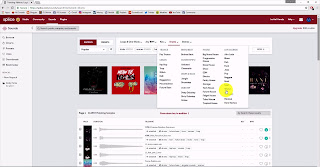
This video is about a service called Splice Sounds, from splice.com.  It's a great place to find samples and loops and sounds for your own productions.


If you're creating a song or producing a track, and let's assume that you're working on electronic-based production rather than traditional instrumental music, then you're probably looking for sounds for your track.  One source of these sounds is any instruments that might be within your DAW (Digital Audio Workstation, or audio editing/production software).  Most DAW's come with various built-in instruments, which are sometimes called VSTi's.  This stands for Virtual Studio Technology Instrument.  Examples of DAW's that come with built-in VSTi's include Ableton, Pro Tools, Cubase, Sonar, Reason, FL Studio, Logic, and several others.  The VSTi's in these various programs can produce sounds ranging from the various pieces of a drum kit (kick, snare, hi-hats, tom, crash, ride) to miscellaneous percussion instruments (shakers, sticks, tambourines, etc.) to traditional instruments like basses, guitars, pianos, and synths.

I should point out that a VSTi is a bit different than a VST (virtual studio technology plug-in).  VST's are more likely to be apps or plug-ins that affect that sound, rather than create a sounds.  For example, VST's might add things like reverb or delay or chorus or equalization or filtering to your sounds.

The only drawback with these VSTi's is that they're limited in what they can produce.  Some are pretty versatile and can produce thousands of different sounds, but more frequently, you're limited to only a few dozen sounds from a single VSTi.  Some VSTi's can only produce a single sound!  Eventually, you're going to start getting bored with the sounds from your existing VSTi's, and you'll start looking externally for additional sounds.

When you get to this point, the common practice is to go online and to start looking for things called Sample Packs.  A sample pack can contain several sounds or several dozen sounds.  These are called samples.  They're short audio clips that contain things like a note or a drum hit or a spoken word, or several of any of those things.  I've seen samples that were as simple as a single hit of a stick on a block of wood, or as complex as three or four lines of a singer's vocals.

Some samples are designed as one-shot samples.  These are intended to be played once, without repeating.  Even though it's called a one-shot, there may be more than one sound in the sample.  For example, I've seen one-shots that were a single hit on a hi-hat, and I've seen other one-shots that were sixteen consecutive hits on a hi-hat.  The main defining characteristic of a one-shot is that it's made to be played one time, rather than repeated constantly.

The other common type of a sample is designed as a loop.  Again, a loop sample can be as simple as a single sounds, but more frequently, it's a series of related sounds, such as four hits on a kick drum.  But the key thing with a loop is that it is designed to be played over and over and over again, constantly, in a repetitive motion.  And the way that it's designed, quite often, the intent is that it sounds "continuous" so that you can't really tell where the loop is starting or stopping.

Traditionally, there have been a lot of websites designed to supply loops to producers.  Some well-known examples are:

and dozens more

These sites all offer sample packs that producers can buy and use in their own music.

An important definition here is "royalty free."  You're probably going to want to make sure that all the samples you buy are designated as royalty-free.  This means that you can use them in your own music that you re-distribute, either for free or for sale, without having to pay further expenses based upon the frequency of use of the samples.  In other words, a royalty-free sample is a one-time purchase that legally lets you share the sample in your song forever, with no extra expenses owed in the future if your song becomes popular.

If you buy a sample pack, you may be paying anywhere between perhaps ten and thirty dollars.  Or less, or more.  That sample pack will contain a handful or maybe a few dozen samples, which are sometimes all fairly related, and intended to work together in the same key.  But your sample pack may also contain some diversity, such as some bass notes, some drum hits, some keyboard notes, etc.  The problem though is that you may not end up using all of those sounds.  You may end up buying a sample pack just because you like two or three specific sounds in the pack, and you ignore the rest.  In that case, those samples that you liked will be pretty expensive for you, several dollars apiece.  That doesn't sound like much, but if you do a lot of production work, you can easily go through hundreds or even thousands of samples in a busy month.

That's where Splice comes in.  Splice has several different sections.  Although we're going to focus on Splice Sounds, here's what else it includes:

Splice Studio - Collaborate remotely with other producers, using the Cloud.  Sort of like a real-time collaboration over Dropbox or Google Drive, if you can envision that.

Splice Community - Share your productions with the Splice community, which has hundreds of thousands of other producers.  Sort of like a SoundCloud meets a PHPbb message board concept.

Splice Sounds - Your source for Samples, as we'll discuss shortly.

Splice Plug-Ins - Buy or rent professional VST's and VSTi's, or download a number of free plug-ins too.

Splice Blog - Information about various topics associated with audio, music, production, etc.

If you want a full run-down of each of those sections, you can find info in the video.  But let's talk specifically about some features of the Splice Sounds section:

- Cost effective:  A subscription is either $8 or $13 USD per month, but allows you to download either 100 or 300 samples per month.  If you don't use up all your credits, they roll over into the future, so you don't lose them.  This works out to pennies per sample.
- Wide selection:  They have literally millions of samples to chose from, royalty-free.
- Easy filtering:  Sort samples by key, tempo, type, instrument, and other criteria, before you start browsing, to be able to find what you're looking for very quickly.
- Audio previews:  High quality audio preview to see if you like the sample.
- And lots more, as the video will show.

The best thing is that you can get a free test account that lets you download about a hundred samples, which lets you go through the service and realize exactly how useful it is.  And you will DEFINITELY realize that if you produce music even on a very casual basis, Splice is well worth the subscription.

If you want to skip the preamble in the video (all the stuff that I just described here), skip ahead to the 9minute 12second mark of the video, and begin playing it there.  From that point on, you'll see the screen shots as I'm describing everything.


Good luck with your music productions!

- Jonathan Clark (DJ Bolivia)
www.djbolivia.ca


PS:  Here's an example of a track that was produced predominantly with samples from Splice, plus a few stock Ableton Live sounds included:


I'm Jonathan Clark, known online as DJ Bolivia.  Do you want to learn more about DJ'ing and music production?  If so, visit:


If you happen to enjoy techno tracks, most of my tracks are available as free downloads from this link:


Thanks so much for visit, and for your support!  I really appreciate the fan base that I've been able to build up over the years.

Also, if you want to visit any of my other sites, here are a few links:
    YouTube:  youtube.com/djbolivia
    SoundCloud:  soundcloud.com/djbolivia
    Blogger:  djbolivia.blogspot.com
    Main Site:  www.djbolivia.ca

Sunday, January 8, 2017

Hijack (Techno Track, and Remix Contest)

Congratulations to Dom3n, from Slovenia, who was the winner of our Hijack remix contest!  Here's his winning entry:


Here are a few of the many other notable entries for the Hijack contest. We'll be slowly releasing additional remix entries over the coming months.


Here is the Original Post that we made about this remix contest:

Urban Francis and I just did another track together.  This time, the style is techno.  We've made the mastered final track available as a free download, we've created a music video on YouTube, and we're sponsoring a Remix Contest (details below).

Most importantly, for the producers, we've shared our entire Ableton Live project files!  Producers can download the full project, see how we put the track together, do your own remixes (which we highly encourage), or even use the project as a template for your own future projects.  All that we ask in return is that you spread the word about our track and video!  Here's the original:


The files that you'll need for remixing (either the Ableton project or the audio Stems collection) are now available from my public Dropbox account.  Just look in the "Bolivia's Remix Projects" folder. My Dropbox also includes a lot of other stuff that people might be interested in.  Here's the link:

The RAR and ZIP versions are different compression types, but the same archives.  ZIP files are universally compatible but larger than RAR.  RAR will be a significantly smaller and faster download, but are only native to Windows.  If you're using a Mac, download a free app such as "The Unarchiver" or "UnRarX" to unpack them.

If you're interested in the stems, you'll be able to use them in pretty much any DAW or audio editor.  They're in WAV format, at 48000/24-bit.  If you're going for the Ableton project, you must have Ableton Live Suite version 9.7 in order to be able to open the project.  Only three resources external to Ableton were used, as detailed in the notes included in the folder.  One external plug-in is a free download (Voxengo's Span), one is cheap (Dadalife's Sausage Fattener), and the last (Absynth 5) is more expensive, but can be replaced with a different VSTi of your choice if you don't have it.


Here's the music video that we produced for this track.  Thanks for sharing it around :)


Remix Contest Details:

We're currently hosting a remix contest for this track.  I'm personally sponsoring the contest with a prize of $300 (in Canadian dollars) for the winning track.  That amount can be paid to the winner (in Canadian funds) as long as you have paypal.  If the winner is a Canadian resident, I'm also willing to mail a cheque if you don't use paypal.

In addition, a number of other randomly selected entries will be showcased on my website, in this blog post, on our SoundCloud accounts, and through other internet media, along with the contact info and/or a promo website for the producers of those remixes (if you want to share such info).


1.  You may share your remixes freely on any internet sites, in any file type(s), both before and after the closing date of the contest, as long as you name your remix according to the following convention:  Urban Francis & Bolivia - Hijack (YOUR NAME Remix).

2.  You should not attempt to register your remix with a professional label or publisher (due to potential copyright content clashes, which I'll explain at the end of this post).  So if you share your remix with the world, you'll have to do it through your own personal publishing efforts.

3.  Your remix can be any genre at all, of your choosing.  Obviously, it will be easier to produce your remix in a style similar to the existing original, ie. some sort of techno derivative.  But feel free to be creative.

4.  You may submit up to two separate entries.

5.  There is no restriction on the length of your submission(s), although we expect that the majority of submissions will probably be between 4 and 8 minutes in length.  Having a submission that is shorter or longer than that range will not handicap you when it comes to judging.

6.  The deadline for entries is 11:59pm (Atlantic Standard Time Zone) on Sunday night, February 26th, 2017.  All judging will take place and winners will be announced within this post by March 15th, 2017.

7.  This contest is open worldwide where permitted, to entrants who have reached the age of majority in their country of residence.  Persons under the age of majority who create a remix may submit their entry through a parent or legal guardian as proxy.

8.  Notwithstanding the above, this contest is void in jurisdictions where prohibited by law.

9.  The prize for the contest winner will be $300 in Canadian dollars.  The Canadian dollar is currently weak, and is worth less than the US dollar.  This amount can be paid to the winner as long as you have Paypal or Interac Email Transfer capabilities.  If the winner is a Canadian resident, I'm also willing to mail a cheque if you don't use Paypal or Interac Email Banking.  I will not send a cheque or use any other type of money transfer service to non-Canadian residents.  The recipient of the winning prize is solely responsible for reporting and submitting any relevant income taxes that might apply to your prize money in your country of residence.  Canadian residents will not enjoy any preference in judging.  We want this to be a global contest.  Having said this, we do expect a number of Canadian entrants, so it's possible that the winner could be a Canadian.  Just rest assured that we definitely won't discriminate against non-Canadians!  The majority of the winners of our past remix contests have been non-Canadians.

10.  Judging will be done by a panel of judges including Urban Francis and other associate producer friends.  The judges' decision will be based upon the quality of music, production values used in making the remix, and possibly also on how innovative the remix is.  The judges' decision will be final, and the judges will not provide feedback on why they chose the specific winning track above any other specific track.

11.  You may share your remix publicly before the contest is over.  However, the popularity of any shared remixes will not influence the judges' decision.  The winner will be decided based upon the judges' perception of the quality of the submissions, not based upon a popularity contest.

12.  Your remix is permitted to include any additional vocal/sample material that you generate, although don't take this as a suggestion that we'd prefer that.  In other words, you may produce an instrumental version if you want, or you can add new vocal/sample material of your own.  You may also include new sounds/instrumentation of your own.  However, please do not include ANY samples or vocals that have been copyrighted elsewhere by another artist.  Any entries containing someone else's copyrighted content will be disqualified.  Any new samples, loops, or other audio materials incorporated into your remix must be royalty-free or exclusively designed by the remixer.

13.  Musicians or producers who are under an exclusive contract with a record label are ineligible.

14.  No purchase is necessary to enter or win this contest.  In fact, there is nothing that you can buy.  However, by entering this promotion contest, you agree that any costs that you incur in creating your remix are solely your own responsibility.

15.  Any potential copyright or other intellectual property rights that may potentially vest in your remix will be granted to Bolivia (Jonathan Clark) and Urban Francis (Francis Cormier).  Note that this is simply to avoid legal complications, and we do not intend to attempt to sell copies of your remixes.

16.  It is expressly agreed that no payment is due to the participants for the production of your remixes.  Only one winner will receive a monetary prize.

17.  By providing your entry details to us, you confirm that you would like to enter the promotion contest and that you agree to be bound by these rules, terms, and conditions, ethics rules applicable on the internet, applicable laws and regulations, and all legislation applicable in your jurisdiction of residence.

18.  Your remix must not contain any illegal, obscene, racist, defamatory, or sexual material, or any material likely to offend any person or any material likely to infringe upon any person's rights of privacy.  The judges reserve the right to disqualify any entries based upon these or any other criteria.  Entrants represent and warrant that their comments or public publishing do not contain any harmful, offensive, or inappropriate content, or any other communications which might defame, disparage or reflect adversely upon the promoters or our goods/services.

19.  We reserve the right to disqualify any submissions that we believe to be the work of other producers.

20.  The winning prize is non-transferable.

21.  We accept no responsibility for entries lost, damaged or delayed, or for any inability to submit entries as a result of computer services, systems, software and/or server failure, error, interruption, defect or delay or any other technical malfunction, including problems with internet connectivity and/or filtering or content by any social media platform.  Entries which are late, incomplete, corrupt, garbled, inaccessible/blocked, bulk, automated, ineligible, suspected as fraudulent, do not comply with the rules & terms & conditions, or which in our sole discretion affect the validity or operation of this promotion contest will not be accepted and are void. 

22.  Except to the extent that they may not be excluded by law, no representations, warranties, terms or conditions that are not expressly stated in these rules & terms & conditions apply to this promotion contest.  We share no liability for any injuries, loss, or damage of any kind arising from or in connection with participation in this promotion (including any damage to entrants' or to any other persons' computer relating to or resulting from participation in, or downloading of any materials or software in connection with this promotion contest), or acceptance, use, misuse, or non-use of any prizes.

23.  We reserve the right to edit and/or augment the rules & terms & conditions at any point throughout the duration of this contest, in case we think of something that we forgot to mention.

24.  Your remix must not include any unauthorized samples or audio which have a copyright belonging to any other artist or entity.


Phew.  That was exhausting.


To Enter:

1.  Send a link to your track via email to Urban Francis in an uncompressed audio format, ie. WAV or AIFF format.  The best way to do this is probably to put it into a Dropbox account (you can get one for free if you don't already have one) and share the link to the file with Urban Francis.  If this isn't possible, you can find other services that would allow you to host and share your file.  But to be honest, Dropbox is probably the best and easiest by far.  An alternative would be to get a free Soundcloud account (if you don't already have one) and upload the file there, and enable downloads, then send that link to Urban Francis.

2.  You should not send your project/session files.

3.  You can produce your remix in the DAW or Audio Editor of your choice.  We'd like to know which DAW you used, but that's mostly just out of curiousity.  Also, although we haven't decided this yet, we might pick a couple of especially good entries to feature in our public dropbox (your entire project files) IF you're willing to do that.  But you don't have to, and that won't affect how we judge the entries.  Again, don't send us your full project/session files.  For now, just tell us which editor you used.

4.  We must have the following information:
     - Your full name.
     - Your producer alias, if you have one.
     - What country you're from.
     - Your email address (if unspecified, we'll assume that it's the one that you use to enter).

5.  You can optionally include a photo with your entry.  This is not mandatory, and won't affect your chances of winning.  We'll only use this if you're the winner and if you happen to want a photo published.

6.  In the event that your submission is randomly selected to be shared by us to a wider distribution, it would be helpful for you to tell us (when you enter) whether or not you want to share any promotional details with your remix.  Details must be limited to one email address and/or up to four website links (soundcloud, facebook, etc.).

7.  Urban Francis will reply to all submissions to confirm that they have been received.  If you don't get a submission confirmation email, please send a second email which is TEXT ONLY to specify that you sent a submission.  That way, if your original email (with links and/or attachments) got redirected to spam/trash, we can look for it.

8.  The email address to send entries to is:  
fcormier27@gmail.com

Good luck with your remixing.  And if you can think of any remix or production-oriented message boards where you could share the link to this post, I'd appreciate it.  Thanks!


Note:  We have copyrighted and registered the original work with SOCAN, the Canadian music licensing agency.  Although we are not pursuing copyright claims if the content is posted online, you should be careful if you do a remix and give it to a label that tries to enforce copyright claims on your own remix.  Since we've already registered the work, we'd be able to prove that we hold the original copyright.  In other words, make sure you don't get into a situation where you sell your remix to a label who then tries to use content-matching algorithms at services such as YouTube and Soundcloud to monetize remixes of your remix.  If such a content-match occurred with our original track (which is on both of those services, and other services) then you'd have a lot of hassle trying to remove your track from the system.  However, this shouldn't be an issue if you share your own mixes freely on YouTube, Soundcloud, and other platforms.  It would only be if you tried to share through a label that was trying to collect publishing royalties that you'd run into an issue.


Don't forget to follow Francis on his SoundCloud account, because he posts free tracks a lot more frequently than I do!  Here's the link:

www.soundcloud.com/urban_francis

Also, if any labels out there are interested in additional tracks similar in style to this one, let us know.  We have a few unreleased tracks that we might be willing to place with labels, although we would not be willing to sign an exclusive or long-term contract with any one label.  We'll do track-by-track one-off placements only.


We've recorded a series of seven separate YouTube videos that will help explain how we put together various parts of this project.  The videos are aimed at intermediate and advanced Ableton producers.  Here they are:


For results from an older 2016 remix contest of a progressive house track called "Courage" that Urban Francis and I produced together, which also has the Ableton project available in my public Dropbox, visit this link:


Thanks for stopping by.  Don't forget to bookmark this post, and come back shortly for more updates!  We'll be posting a number of the remix contest entries here throughout March.


I'm Jonathan Clark, known online as DJ Bolivia.  Do you want to learn more about DJ'ing and music production?  If so, visit:


If you happen to enjoy techno tracks, most of my tracks are available as free downloads from this link:


Thanks so much for visit, and for your support!  I really appreciate the fan base that I've been able to build up over the years.

Also, if you want to visit any of my other sites, here are a few links:
    YouTube:  youtube.com/djbolivia
    SoundCloud:  soundcloud.com/djbolivia
    Blogger:  djbolivia.blogspot.com
    Main Site:  www.djbolivia.ca

Saturday, February 27, 2016

Guitar For Beginners Course

This is the outline of a course that I’ve wanted to put together for several years.  I haven’t had time to produce the videos for this yet, so it may be slightly difficult to work your way through this material without those videos to assist you.  I’m only putting this online now because I’m still working on fine-tuning the outline and content.  I’ll be filming and editing the videos in the first two weeks of December 2026, so if you’re interested in this course, check back then.  I guess some of the information might still be useful to some people before the videos are online though.  After all, I learned to play without videos or a teacher.

If you want a quick bookmark for this page, use this:    djbolivia.ca/guitar

If you find this page to be useful, please send a link to friends!  Remember, everything that I'll be teaching you here is completely free.

In this course, I'll have some assistance from a good friend of mine, Nick Chase.  Nick and I have played guitar together in a couple of bands.


Video 01:   “Introduction”

This course is not about DJ’ing or music production, even though most people know me for those skills.  However, I feel that music producers should know how to play an instrument.  Guitar and piano are probably the two most useful and conventional instruments.  Incidentally, I’ll be doing a piano series someday too.  In fact, I'll probably also be doing a bass guitar and a drums series too.

There are lots of other guitar courses out there, but this is designed specifically for my YouTube channel subscribers.  I’m going to take a slightly different approach than with some of the other courses that are out there (well, I think I will – I haven’t really looked at any of those courses, so I might be wrong).

For those of you who are not excited about learning music theory, don’t worry!  I’ll teach almost all of this course without teaching you any substantial theory, for the beginner section anyway.  Do I know a lot of music theory?  Yes, because I’m a classical pianist.  However, even though I can play guitar fairly comfortably (I used to play in a band), I don’t even know the notes on the guitar except for the two E strings (which are luckily, the same).  So if I can do what I can without knowing note names, I think I can teach you how to get hands-on as quickly as possible.  You will, however, need to know a fair amount of theory (which I’ll teach) once we start into the Intermediate Guitar series.

Here’s what you need to put into this:  Twenty minutes of practice per day for a month.  You will have sore fingers, there’s absolutely no way around it.  When I stop playing for several months, I also lose the callouses from the tips of my fingers, so when I start playing again, I go through the same pain that everyone else does.

When I say to do twenty minutes per day for a month, I mean that as a bare minimum to start building up some decent callouses.  If you’re serious about trying to learn that quickly, you can, but I’d recommend trying to spend as much as forty minutes per day practicing, or whatever you can handle until you’ve built up callouses on your fingers.

As a beginner player, you are not going to be able to control your fingers.  I had the same problem when I learned to play.  I also had the same problem when I learned to play piano, and learned to type.  Face it, we all have this problem when we’re learning.  All I can say is that it gets easier.  Much easier.

There are just under two dozen lessons in this series.  You can do the first seven lessons all in one sitting, because you don’t start learning to play chords until the seventh lesson.  After that, you can possibly do one lesson per day, but for many of you, I don’t think your fingers and memory will be able to handle that pace.  Practice every day, and do your best.  I’ve structured these lessons so it’s easy to come back to individual lessons several times, until you feel comfortable to move on.  I’d spread these lessons out over the course of about a month, and repeat some lessons.  If you end up working at the course every day, you can get away with taking two days per chord, and you’ll still be through the whole series in a month.

As I just mentioned, the first six videos don’t involve playing the guitar, so you can do them all in one sitting if you want.  I just separated them because you might want to come back to refer to a couple of these later, such as the lesson about tuning a guitar.

YouTube doesn’t have annotations on mobile phones, so any notes that I want to add after the videos have been produced will also be put in the text descriptions under videos.  I will also put a clickable index in each text description.  That’s basically this page.  You should bookmark this page!

Once I get to the point of starting to teach you some chords, I’ll also teach you at least two songs to accompany each new chord, to give you more practice material.  For copyright reasons, I’m not going to include those songs in the same videos that I use to teach the chords, in case any of the sample songs get blacked out in certain countries for copyright reasons.  So to find the practice songs, you’ll have to look for the links in the text descriptions accompanying the videos (or look for the links on this page).

If you’re interested in this, let’s get started.


Video 02:  “The Parts of a Guitar”

In this video, I’ll cover the parts of the guitar, including:  body, neck, bridge, frets, fretboard, strings, tuning pegs.

I’ll discuss the differences between electric and acoustic guitars.  I’ll discuss pickups, and plugging the guitar into an amplifier, if your guitar is capable of that.


Video 03:  “How to Strum”

In this video, I’ll talk about how you should strum your guitar.  I’ll also teach you two or three very basic patterns.

You’ll want to know about differences between strumming up or down, how to emphasize notes, how to varying the timing of your strumming, and so on.  But I’ll keep it simple.


Video 04:  “Tuning the Guitar”

In this video, I’ll teach you how to tune a guitar.

There are different ways to turn your guitar.  I’ll show you three common methods:  with the help of a piano, by using a guitar tuner or a tuning app, or from listening to recorded music.

I’ll also talk about how to tune from relative strings (once you have your bottom E string tuned), versus a method where you tune each string individually (this is common when tuning to a piano or a tuner).

I’ll talk very briefly about alternate tunings, and also about the difference in tuning between an open string and a string which is being pressed down, but I won’t go into depth about these things.  Just a very quick mention so you’re aware that there are things to learn about these topics.


Video 05:  “Stringing a Guitar”

In this video, we’ll teach you how to string a guitar, and demonstrate.

It may be easier for you to string your guitar if you have a string winder tool.  These are plastic and only cost a few dollars. 

It may also help if you have a set of pliers, and a wire-cutter.

There are different types of strings, and I don’t just mean electric versus acoustic.  I’ll teach you about some other differences, such as wound versus unwound strings, the thickness of strings, and how different compositions (metal) affect your playing.


Video 06:  “Simple Theory”

I said that I wasn’t going to teach you much theory, but this will be the one video that you may hate.  Don’t worry, I’ll try to keep this from getting complicated.

In music, the notes of a guitar match the letters of the alphabet, from A up to G.  After that, they repeat.  If you pick any specific note, there is often more than one place on the guitar that can produced that specific note (although never in two spots on the same string).

Two notes that have the same name are either the exact same pitch (frequency), or they are separated by an octave.  An octave means a doubling of the pitch frequency, but the two notes will sound good together.

A chord is a group of different notes.  Some notes sound good together, and some don’t.

Some chords have different “emotional feeling” to them.  I’ll explain the emotional difference between major versus minor keys, although I won’t delve into intervals in any depth.

Major chords are the default chord.  Major chords usually don’t have anything after them.  If the word “Major” does happen to get written out (usually for clarity), it is capitalized.

If a chord is minor, the fact that it’s minor must always be specified to ensure that people don’t assume a chord is major.  If a minor chord has the full word, “minor,” it is all lower case.  Sometimes a symbol is used instead.  The symbol is a lowercase letter “m.”  As an example, an E minor chord could be written out as “E minor” or “Em.”

Although a “triad” means a group of three notes, if you repeat a note, it doesn’t count as an “extra” note.  Interestingly, even though all the chords that I’m going to teach you in this series may have as many as six strings playing at once, they’re all considered to be triads.  None of them have more than three “letters” in them, even though sometimes a letter/note will be repeated in the chord.

There are other types of chords like 7th and 2nd and 6th and sustained 4th notes.  Less frequently, there are even higher numbers, like 9th and 11th and 13th notes.  These just mean that extra notes are added.  They usually sound pretty close to the major or minor chord, so I’m going to completely ignore them throughout this beginners series.  I’ll explain those when we get to the intermediate guitar series.  If you’re reading a piece of music and you see something like a E minor 7th chord, just play an E minor chord for now.  It’ll sound fairly close.  Any extra numbered notes are just for colour and complexity.

I’ll sometimes talk about how often different chords are used in music.  I’m going to be referring to one study that was done by analyzing a couple thousand modern songs in their original keys.  There have been different studies done, which have had different results depending on which songs were studied.  So while the study I’m basing my comments on may not be perfect, it’s good enough to get a rough idea of how often chords are used.  In that particular study, the chord breakdown was as follows:  G Major 59%, D Major 51%, C Major 48%, A Major 44%, E Major 32%, F Major 30%, A minor 28%, E minor 27%, B minor 19%, B Major 18%.

If I talk about the “key” of a song, it means the main chord or “root” that the song is based upon.  Each key has a few other chords that sound particularly well when paired up with the root.

Transposing simply means playing a song in a different key.  If you move the root of a song to a different key, you also have to move all the other chords within the song by the same amount.  We will not study any transposition in this beginners series.  However, you’ll undoubtedly learn to transpose before too long.  That’s because many musicians will often pick different chords to use as the root key of the song, perhaps based on the range of their vocalist, or on how hard it is to do different fingerings.

The last tricky thing is that for each Major key, there is a relative minor.  The relative minor of a key is the minor chord that works best with a major chord.  Usually, this is approximately three letters down.  For example, the relative minor of G major is E minor.  The relative minor of F major is D minor.

Between certain notes, there are “accidental notes.”  I’ll have to demonstrate this on a piano, where it’s easy to visualize because the black keys are the accidentals.  Between any two notes, the accidental might be called the “sharp” of the lower note, or the “flat” of the upper.  For example, the accidental between the D and E notes can be called either D sharp or E flat.  The accidental between the A and B notes can be called either the A sharp or B flat.  There is no accidental between B and C, nor is there an accidental between E and F.  It would take me weeks to explain that properly.  For now, just go with it.

I know, this music theory is quite confusing.  You’ll probably want to bookmark this specific video and lesson, and refer back to it repeatedly.


Video 07:  “First chord, D Major”

I find this to be one of the easiest chords.  Most common chords on guitar use three fingers.  Some of the more complicated ones use four, and a couple chords only need two fingers.  Of the ones that use three fingers, this is probably the most comfortable.  The D Major is about the second most common chord in songs.

In this video, I will demonstrate the fingering.  I will play the chord.  I’ll very briefly show the equivalent on the piano. 

Are there alternate fingerings?  No, alternate fingerings are not common for this chord.

Here are links to a couple of additional videos of one-chord songs that were based on D Major.  There aren’t a lot of such songs!  It’s quite hard to base an entire song on just one chord:

Side Video:  Palace Brothers, “I Was Drunk At The Pulpit”
  Chords Used:  D

Side Video:  CCR, “Run Through The Jungle”
  Chords Used:  D


Video 08:  “Second chord, G Major”

This is the most common chord on guitar.  It is a more common key for songs than the D Major.  It is also used quite often as a backup chord in songs that are in the key of C Major or D Major.

This chord matches well with a D Major.  I promised you that I wouldn’t get into much theory, but if you want to remember a little tidbit, the G chord is the Subdominant (or Fourth) of the D major.  Or if you reverse them, the D Major is the Dominant (or Fifth) of the G Major.

In this video, I will demonstrate the fingering.  I will play the chord.  I’ll very briefly show the equivalent on the piano. 

This is a pretty comfortable fingering.  Also, there are two different common fingerings, one using three fingers and one using four fingers.  In the common alternate fingering, you place the ring finger on the B string, on the third fret.  I don’t recommend either of these two chords as being better or worse than the other.

Here are links to a couple of videos that only use the D Major and the G Major chords:

Side Video:  Sublime, “What I Got”
  Chords Used:  D

Side Video:  Three Children’s Songs
  Mary Had A Little Lamb:  G, D
  Row Row Row Your Boat:  G, D (transpose from link)
  London Bridge:  G, D


Video 09:  “Third chord, E minor”

It’s time to talk about sore fingers.  Your fingers are probably really sore already!  Remember, it will get easier with practice, although it’ll probably take a full month to get to that point.  One trick is to let up your finger pressure on the chords at times, to make it easier.  I’ll demonstrate this in the video.

This is our first minor chord.  It’s also one of the easiest chords to play, since it only has two notes!

It’s only the eighth most common chord, but I want to teach you this as our third chord because it’s so easy to play, and also, because it’s the relative minor of the G Major chord that we just learned.  That means that it’s a good match for the G Major chord.

In this video, I will demonstrate the fingering.  I will play the chord.  I’ll very briefly show the equivalent on the piano. 

There are alternate fingerings for this chord.  I’m teaching you to use your 2nd and 3rd fingers.  Sometimes, guitarists will use their 1st and 2nd.  I don’t recommend that.  Sometimes, guitarists will use their 3rd and 4th.  This is a bit harder, but I wouldn’t discourage it.  This would be a good way to build up some extra strength in your weaker fingers.

Here are links to a couple of songs that only use the D Major, G Major, and E minor chords.

Side Video:  America, “Horse With No Name”
  Chords Used:  Em, D

Side Video:  Radiohead, “High And Dry”
  Chords Used:  Em, G, D  (needs capo!)

If someone can think of another song with an Em chord, that doesn't have any other chords other than G or D, let me know.  I need to swap out "High and Dry" (which needs a capo) for a different song.  Email djbolivia@gmail.com


Video 10:  “Fourth Chord, C Major”

C Major is a popular chord.  It’s the third most popular chord on a guitar, and it’s also commonly used when playing along with people who are playing piano, since it’s the easiest chord on a piano.

C Major is the Subdominant (Fourth) of the G Major chord, and G Major is the Dominant (Fifth) of the C Major chord, so these two chords work well together as a pair.

In this video, I will demonstrate the fingering.  I will play the chord.  I’ll very briefly show the equivalent on the piano. 

Show an alternate fingerings, by using the pinky on the G note of the high E string.  This is difficult for beginners.  I don’t recommend practicing this just yet, but it’s good to know.

Now we’re making progress.  By learning this fourth chord, we now have the choice of hundreds and hundreds of songs.  There are videos out there that list dozens of songs with the same four chords that we’ve examined so far.  If you want to look for some, find the RipTard channel on YouTube.

The videos that I use as demonstrations probably won’t use C Major as their root chord.  It’s more common to find songs in G Major that include the C Major as the subdominant.

Here are links to a couple of songs that only use the chords that we’ve learned so far:

  Side Video:  Ben E King, “Stand By Me”
    Chords Used:  G, Em, C, D

  Side Video:  Green Day, “Time Of Your Life”
    Chords Used:  G, C, D, Em

Possible additional songs could be “Achy Breaky Heart” (Billy Ray Cyrus) or “Sweet Home Alabama” (Lynyrd Skynyrd).


Video 11:  “A Minor”

This is only the seventh most common chord, but it’s one of my favorites.  It’s often used after a G Major.

This is the relative minor of the C Major chord.  What’s even better is that the fingerings of these two chords are really easy to move between, because your forefinger doesn’t move and you can just swivel your middle finger and ring finger.

In this video, I will demonstrate the fingering.  I will play the chord.  I’ll very briefly show the equivalent on the piano. 

There is an alternate fingering, which doesn’t use your forefinger.  This is not commonly used until you get to barre chords, so let’s stick with the conventional fingering for now.

The problem with teaching you this chord right now is that a lot of songs that include the Am also use the F Major, which I haven’t taught yet.  But there are still some well-known examples that we can practice with.

Here are links to a couple of songs that only use the chords that we’ve learned so far:

  Side Video:  4 Non Blondes, “What’s Up”
    Chords Used:  G, Am, C  (needs capo – explain this in video!)

Side Video:  Bob Dylan, “Knockin’ On Heaven’s Door”
    Chords Used:  G, D, Am, C

Possible additional songs could be “Shake It Off” (Taylor Swift) or “Firework” (Katy Perry).


Video 12:  “A Major”

This is our first example that lets us contrast a minor and major chord of the same letter.

This is also the first chord that will give your pinky finger a real workout.  This one can be tricky for people with larger fingers, or if you’re on a guitar with a narrow neck.

The A Major is about the fourth most commonly used chord.  I find that, like the Am, this is often used as a chord following a G Major.  It’s also used frequently in songs that are in D Major, since it is the dominant chord (Fifth) in that key.

In this video, I will demonstrate the fingering.  I will play the chord.  I’ll very briefly show the equivalent on the piano. 

There is a debatably easier fingering, which uses your first three fingers instead of the last three.  However, I don’t recommend that you use the easier fingering.  You need to exercise your pinky.

Here are links to a couple of songs that only use the chords that we’ve learned so far:

  Side Video:  Deep Blue Something, “Breakfast At Tiffany’s”
    Chords Used:  D, G, A

  Side Video:  Rolling Stones, “Dead Flowers”
    Chords Used:  D, A, G

Possible additional songs could be “Bad Moon Rising” (CCR) or “Fat Bottomed Girls” (Queen) or “Honky Tonky Women” (Rolling Stones).


Video 13:  “E Major”

This is only the fifth most common chord on guitar, but it’s the major chord that most closely relates to the standard tuning of a guitar, since the top and bottom strings of the guitar are both E strings.  This chord is the gateway to barre chords, which we’ll learn later.

In this video, I will demonstrate the fingering.  I will play the chord.  I’ll very briefly show the equivalent on the piano. 

This chord has an alternate fingering, using the pinky.  Try to use this occasionally, for practice, even though you probably won’t use it when playing the normal basic E Major.

Here are links to a couple of songs that only use the chords that we’ve learned so far:

  Side Video:  Norman Greenbaum, “Spirit In The Sky”
    Chords Used:  A, D, E

Side Video:  John Cougar, “ROCK in the USA”
    Chords Used:  E, A , D

Possible other songs could be “Authority Song” (John Cougar Mellancamp) or “What I Like About You” (Romantics).


Video 14:  “F Major”

This chords is a bit trickier than most of the other basic chords.  This may be one of the reasons that a lot of guitar songs are not in the key of F.  However, since the F chord is the subdominant (Fourth) of C Major, it still gets used fairly frequently.  The F Major chord is also common in songs with an A minor.

This is the first chord where we’re going to use one finger to cover two strings at once, by flattening your forefinger sideways instead of just pressing the string with the tip of your finger.

In this video, I will demonstrate the fingering.  I will play the chord.  I’ll very briefly show the equivalent on the piano. 

Although I just showed you the common fingering for this chord, this is the most common major chord that would often be played by a barre chord instead of standard fingering.  But we’ll learn that properly when we get to barre chords.

Here are links to a couple of songs that only use the chords that we’ve learned so far:

  Side Video:  Beatles, “Let It Be”
    Chords Used:  C, G, Am, F

  Side Video:  Blink 182, “Dammit”
    Chords Used:  C, G, A, F  (slightly odd that it uses A rather than Am)


Video 15:  “D minor”

This is not a common chord at all, as the relative minor of F Major, but it’s one that I really like because it’s comfortable to play.  It also works well following a C Major chord in some songs.

In this video, I will demonstrate the fingering.  I will play the chord.  I’ll very briefly show the equivalent on the piano. 

There is no comfortable or common alternate fingering for this chord.

Here are links to a couple of songs that only use the chords that we’ve learned so far:

  Side Video:  Counting Crows, “Mister Jones”
    Chords Used:  Am, F, Dm, G, C

  Side Video:  Bob Seger, “Still The Same”
    Chords Used:  C, Em, G, F, Dm


Video 16:  “B minor”

The B minor is the relative minor of D Major.  They actually share several of the same notes in common.

I find that this chord requires me to move my hand quite a bit from the position that I use for most other chords, but I still find it to be very comfortable.  I like it because it’s such a comfortable and casual layout of a regular hand position.  You don’t have to twist your fingers very much.

In this video, I will demonstrate the fingering.  I will play the chord.  I’ll very briefly show the equivalent on the piano. 

Once again, this is a chord which will be played as a barre chord by some people, but for now, you can get a cleaner sound as a beginner by playing it with just four fingers, with each finger playing an individual note.

Here are links to a couple of songs that only use the chords that we’ve learned so far:

  Side Video:  Pink Floyd, “Comfortably Numb”
    Chords Used:  Bm, A, G, Em, D, C

  Side Video:  Beatles, “Hard Day’s Night”
    Chords Used:  C, G, F, Bm, Em


Video 17:  “B Major”

Here’s another case of a major chord versus a minor chord.  The B Major is rarely used for the root key of a song.  However, it’s used fairly often in songs in E Major.  The fingering is very close to that for a B minor, although I find this to be more difficult to play than B minor.

This is the last of the significant chords in this series.  We’re getting close to the end!  The next video after this one introduces a new chord, but it’s exactly the same fingering as the B Major that you’re going to learn today, so it will be fairly easy.

After that, although there are a few more videos, they’re more about techniques and tools, instead of trying to learn new fingerings.  You should feel good if you’ve made it this far.  With this and the other ten chords that I’ve taught you, you can probably play about 98% of today’s popular music, in every style from rock to pop to blues to country, and other genres.

In this video, I will demonstrate the fingering.  I will play the chord.  I’ll very briefly show the equivalent on the piano. 

An alternative fingering is to play this as a barre chord, which I’ve referred to several times.  Be patient:  we’ll finally get to barre chords in just a couple more lessons.

Here are links to a couple of songs that only use the chords that we’ve learned so far:

  Side Video:  Bob Dylan, “A Hard Rain’s Gonna Fall”
    Chords Used:  E, A, B

  Side Video:  Proclaimers, “I’m Gonna Be 500 Miles”
    Chords Used:  E, A, B


Video 18:  “B flat Major”

As I mentioned in the last video, this chord is almost a perfect copy of the B Major chord.  You’re just going to slide it down a fret.

In this video, I will demonstrate the fingering.  I will play the chord.  I’ll very briefly show the equivalent on the piano. 

Again, this chord may be played as a barre chord, which we’ll finally get to in the next lesson.

Here are links to a couple of songs that only use the chords that we’ve learned so far:

  Side Video:  Ritchie Valens, “Donna”
    Chords Used:  F, Dm, Bb, C

  Side Video:  Fun, “We Are Young”
    Chords Used:  F, Dm, Bb, C


Video 19:  “The Capo”

In this video, I’ll explain how a capo works.

The main use of a capo, for most singer-songwriters, is to change the pitch to a different key that more closely fits their vocal range.

Another common use of a capo, which is often very directly related to the previous point, is to change the chords so the fingerings are easier.  This is especially useful if the guitarist is required to play in a specific key, along with another instrument that cannot readily transpose keys.  Most other instrumentalists cannot change their pitch or range as readily as a guitarist.

A third use of the capo relates to keeping the guitar in pitch.  Certain strings (especially the first unwound string on an acoustic) don’t stay in pitch well when comparing an open string versus one pressed onto a different fret.  This is complicated and I won’t explain it here, but the simple solution is to make sure that all strings are “pressed” all the time.  A capo has that effect.

The best range for a capo is the bottom three or four frets.  If you start moving it up the fretboard too high, the pitch sounds very obviously different.  That’s not necessarily a bad thing, but it’s obvious.

  Side Video:  Neil Young, “Thrasher”
    Chords:  Play chord pattern C/F/G/Am but it’s really in D (capo on 2nd fret).


Video 20:  “Barre Chords”

In this video, I’ll go into a detailed explanation of what a barre chord is, and why it’s useful.

Barre chords are also known as power chords, and are used quite heavily by a lot of heavy metal and rock guitarists, especially on electric guitars.

There are several styles of barre chords, but the most common of them emulate the E Major, E minor, and B minor chords.

Even if you have no intention of using power chords up the neck of the guitar just yet, barre chords can be useful for playing some standard chords, especially F#m (new), and the F major and B minor that we’ve already learned.

  Side Video:  Green Day, “Basket Case”
    Chords:  Eb, Bb, C, G, G#, C#


Video 21:  “Conclusion”

Practice, practice, practice.  Right now, your fingers are probably really quite sore!  Every time I stop playing guitar for a while and lose my calluses on the tips of my fingers, I find that it takes me at least thirty full days of playing at least 20 minutes per day to get my fingertips back in shape.  There’s no way to avoid this!  I’ve heard of everything from people taking painkillers before they practice, to putting crazy glue on the ends of their fingertips.  The only thing that really works is to let time pass and keep practicing.  And once you’ve built up your callouses, try to never go more than a week without at least an hour or so of practice, to keep your fingers in proper playing condition.

For a first time learner, practicing 20 minutes per day, I’d guess that even though the pain subsides after about a month, playing only starts to feel completely comfortable after about sixty days.  Be persistent.  Don’t give up!

With the dozen chords that I’ve taught you, you can play just about any song.  In fact, with just the first four chords and a capo, you can probably play 95% of modern music.  There are TONS of free guitar lessons and videos on the internet.  Lyric sheets are available for just about every song released in the past fifty years, and many have chords.

Once you get the chords down, start to learn Tablature, which is often just abbreviated as tab.  I’ll cover tablature in the intermediate guitar series.

A lot of musicians do a lot of slight variations on the main chords that I’ve taught you so far.  If you want to get a head start on moving on past what I’ve taught you, you can also start to learn a number of 7th chords, and chords with other additional variations such as 9th, 2nd, 4th, and 6th notes.

After this, I’ve also included a bonus “lesson 22” which you can look at if you want, after you’ve gotten very comfortable with basic chords.  In it, I give you some goals to practice for building your skills in picking individual notes, by teaching you some major scales.  It’ll be a lot more boring than playing along with other musicians or YouTube videos, but it will definitely help improve your skill level as a guitarist, and prepare you for the next set of intermediate lessons.


Video 22:  "A Peek at Guitar Scales - Majors"

Once you’ve mastered the first twenty lessons, and feel really comfortable with your basic chords, you might want to start learning some more advanced skills that will be useful before you move on to the intermediate series.  Picking individual notes is a skill that may take you a few months to start to feel comfortable with.

Most of the contents of this video can’t easily be explained in text form.  In this video, I’ll talk about picking strings individually, up and down.  I’ll demonstrate the technique on individual notes.

I’ll then explain a major scale.  I’ll show the easiest of the five inversions for picking a major scale.

Finally, I’ll demonstrate a picking exercise, which will include picking up and down the scale and also up and down the neck, alternating picking directions, and other skills.


Follow Jonathan Clark on other sites:
        Twitter: twitter.com/djbolivia
        SoundCloud: soundcloud.com/djbolivia
        YouTube: youtube.com/djbolivia
        Facebook: facebook.com/djbolivia
        Main Site: www.djbolivia.ca
        About.Me: about.me/djbolivia
        Music Blog: djbolivia.blogspot.ca
        MixCloud: mixcloud.com/djbolivia
        DropBox: djbolivia.ca/dropbox


Incidentally, all the graphics used in the chord fingerings here were ones that I designed myself, since I couldn't find high-resolution graphics online that were free to use.  These are all 2160x2160 pixels.  Please feel free to use on your own sites if you keep my site logo on the graphic, OR if you link to that same web address somewhere on your own page.  Even if it's just a small link in fine print in a corner somewhere, that's all that I ask.

If you have questions for me about what I'd recommend when buying an acoustic guitar, here's a link to an excellent article that rates a huge variety of guitars, in all price ranges:
  https://www.gearank.com/guides/acoustic-guitars

Also, a note about copyright law:  It is not legal to post copyrighted lyrics on the internet.  So I'm not going to include lyrics or chords in any of my own written posts.  However, it has become common practice for people to post lyrics and content on YouTube.  There's a reason for this ... when a copyright holder discovers their content in your video, they can "monetize" it and collect revenue from views on the video.  This isn't possible with web pages.  For this reason, most copyright holders will actually permit and even encourage people to include copyrighted content in YouTube videos now (especially since certain licensing agreements that were inked with YouTube and major labels in 2014).  Since that breakthrough agreement, it is much less common for videos containing other entities' copyrighted content to be blocked from YouTube.


I'm Jonathan Clark, known online as DJ Bolivia.  Do you want to learn more about DJ'ing and music production?  If so, visit:


If you happen to enjoy techno tracks, most of my tracks are available as free downloads from this link:


Thanks so much for visit, and for your support!  I really appreciate the fan base that I've been able to build up over the years.

Also, if you want to visit any of my other sites, here are a few links:
    YouTube:  youtube.com/djbolivia
    SoundCloud:  soundcloud.com/djbolivia
    Blogger:  djbolivia.blogspot.com
    Main Site:  www.djbolivia.ca